


Metrics
Different licensing models
Client, user and additional metrics can be stored on license records and applied in evaluations.
Lan-Inspector Enterprise brings together discovered software, commercial license records, metrics, usage data and organizational responsibilities.
Purchased or rented licenses are maintained in the license pool and reconciled with the discovered software estate. License balances can be scoped by location, group, vendor or product and configured through filters, output columns and calculation options.
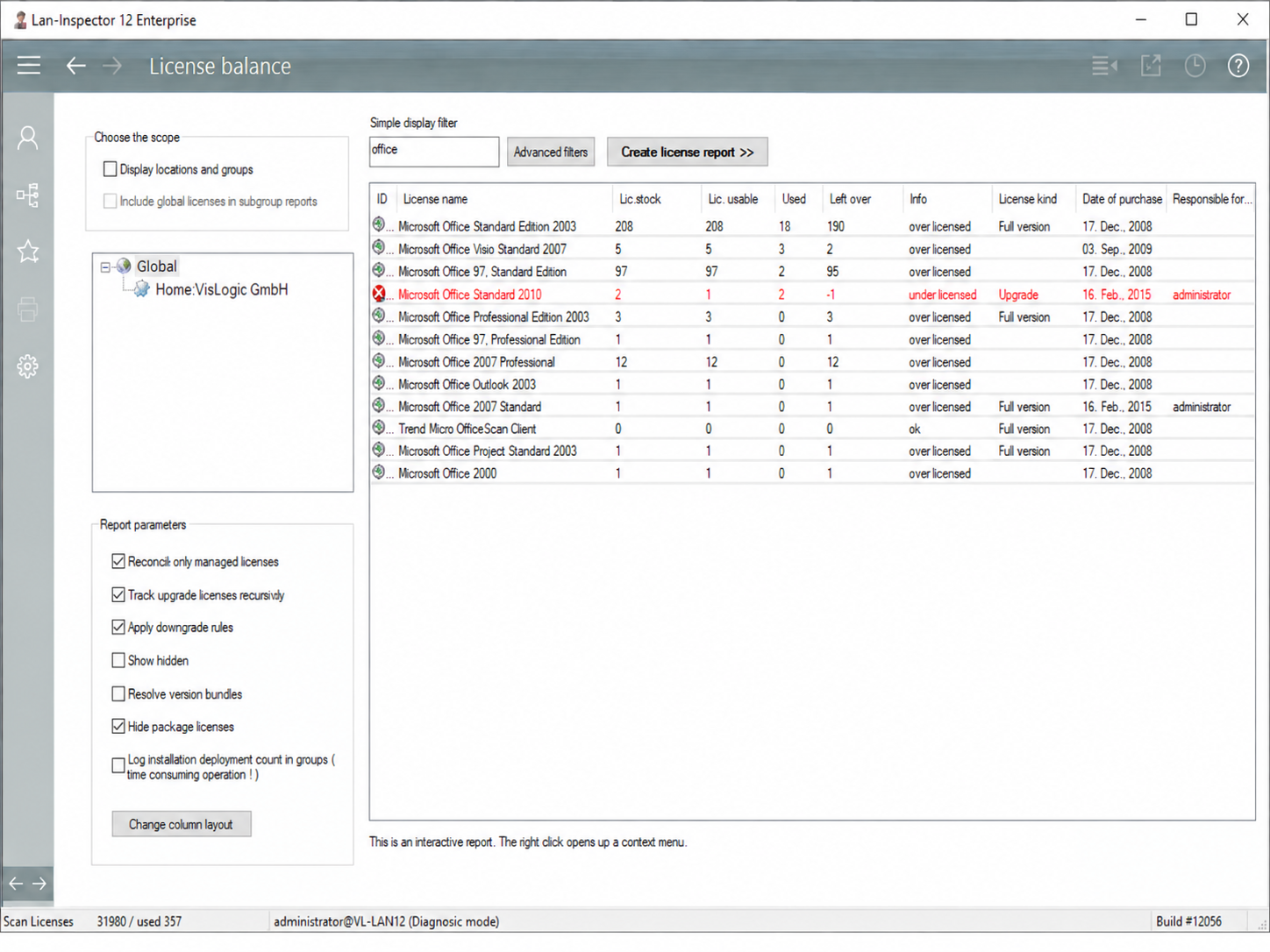
Licensing reality includes metrics, bundles and usage rights. Lan-Inspector Enterprise models these relationships in the balance instead of treating every installation alike.
Client, user and additional metrics can be stored on license records and applied in evaluations.
Additional installed components are evaluated separately only when the covering primary license does not apply.
Base licenses, upgrade relationships and downgrade rights can influence the license balance.
AD user groups can be linked to commercial licenses and evaluated as entitled users.
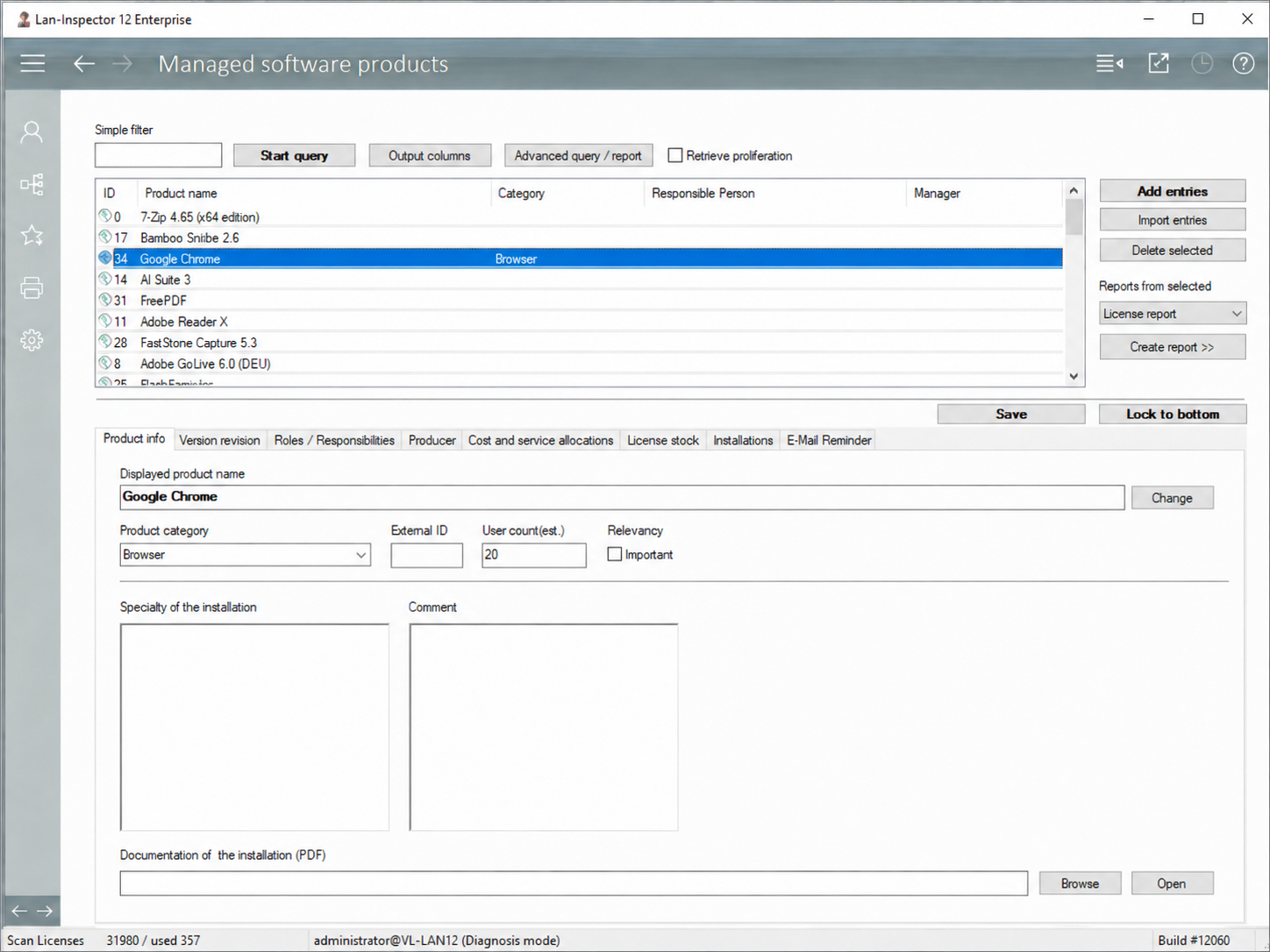
Technical inventory is enriched with responsibilities, categories, license information, deadlines and organizational notes. A discovered product becomes a managed software object with clear ownership.
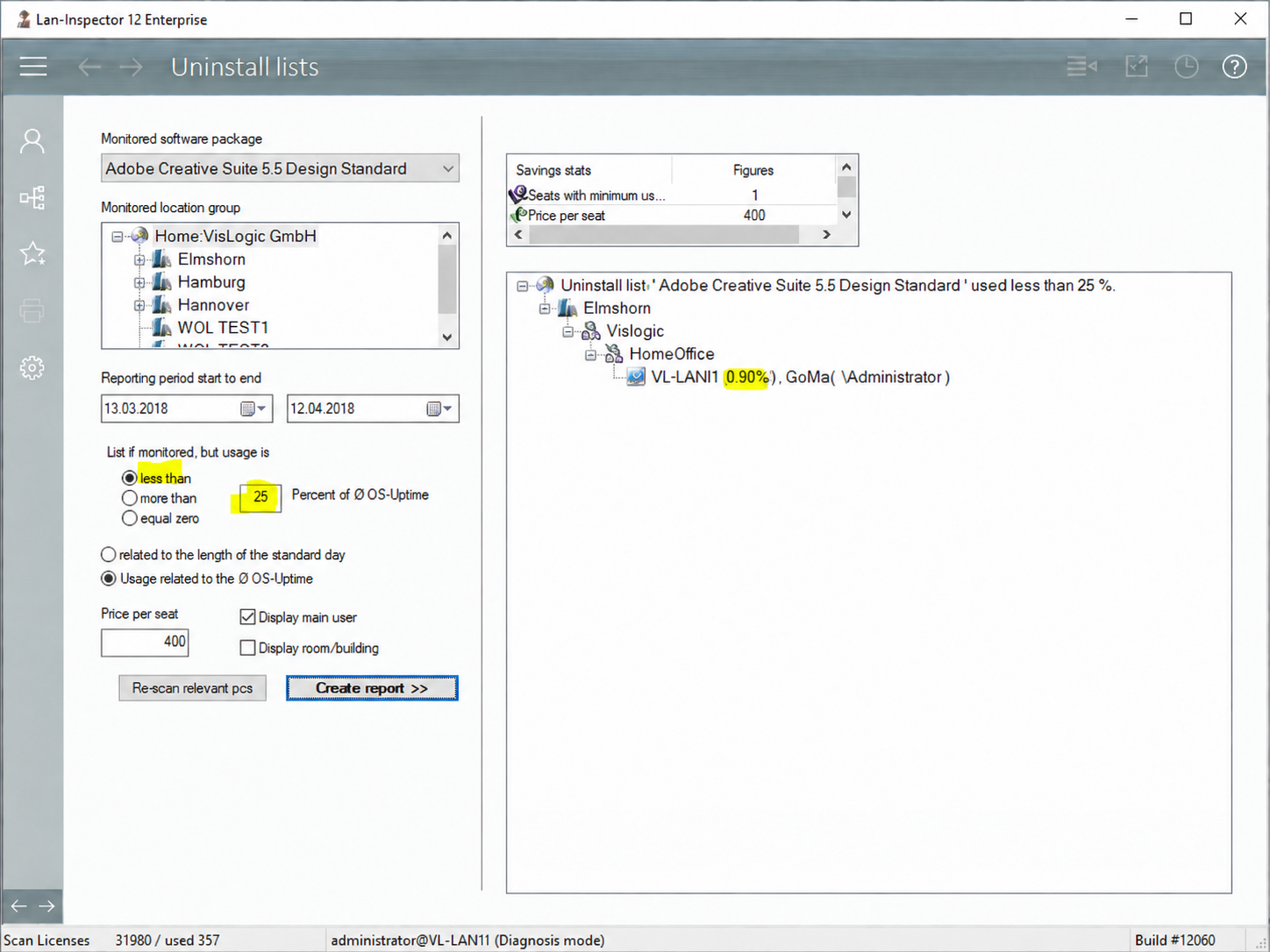
Lan-Inspector collects usage data for defined software packages over a selected period. Reports show on which computers products are used frequently, rarely or not at all.
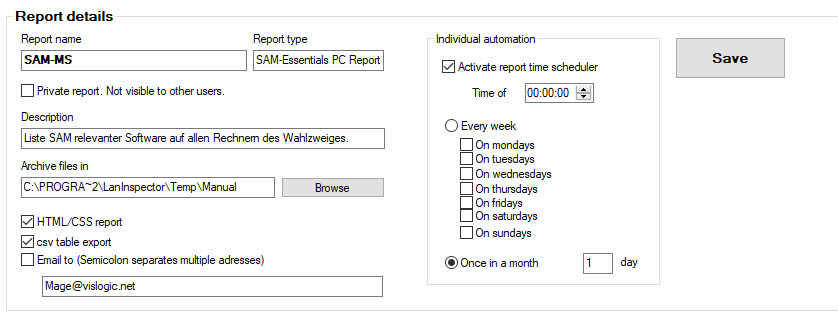
A configured license balance can be stored as a report template and repeatedly applied to current data. The Enterprise Server creates the output on schedule and sends it automatically by e-mail.
We discuss data sources, balance logic, responsibilities, reporting needs and the required degree of automation.
Schedule a meeting